GRP / FRP Storage Tanks
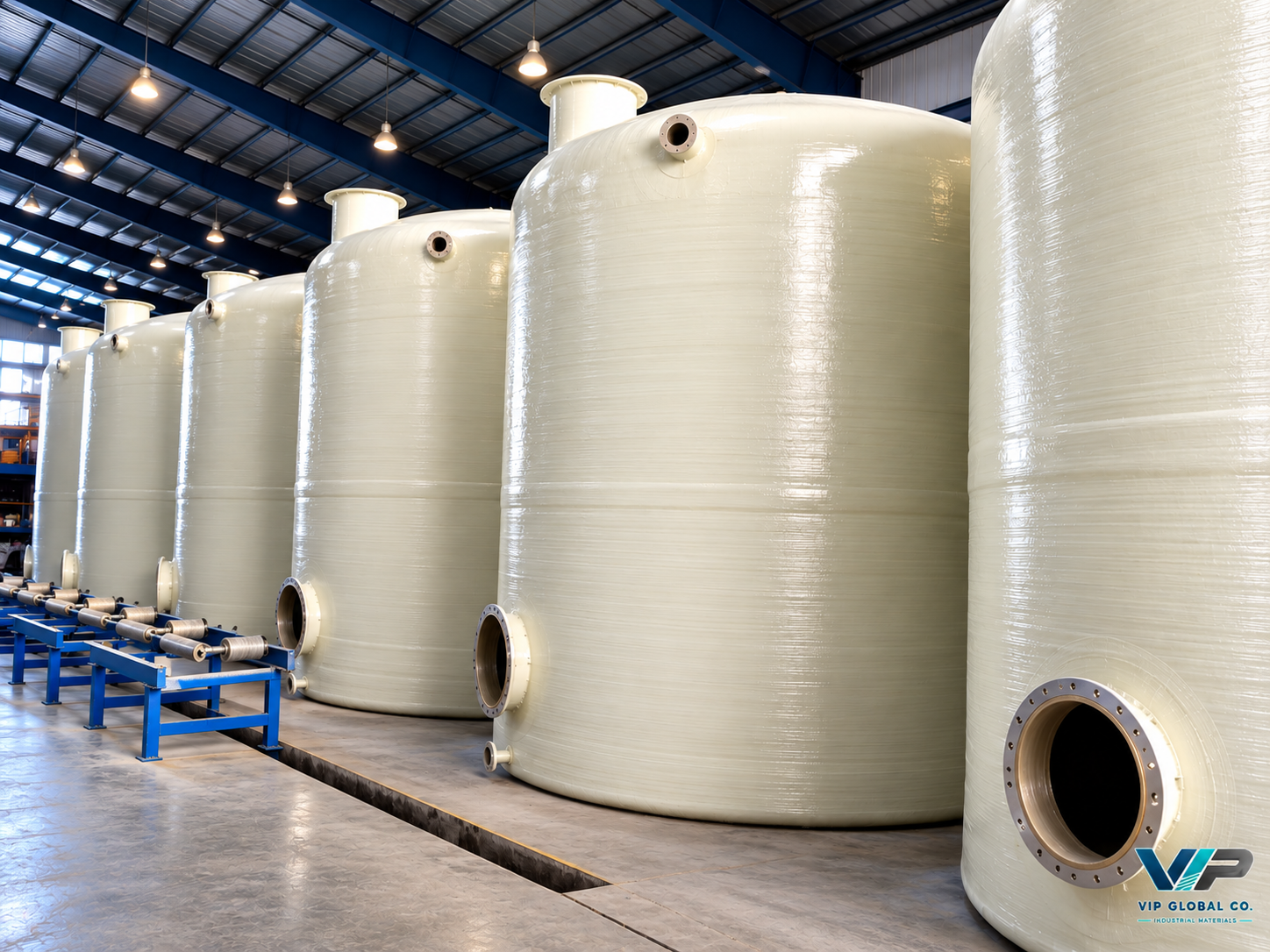
Fiberglass storage systems for water, wastewater and compatible industrial liquids, with configurations selected around the application and installation site.
VIP Global Co. coordinates GRP/FRP tank supply through manufacturing partnerships and project-based production cooperation. Tank geometry, resin system, connections and installation requirements are reviewed together to establish a suitable technical and commercial solution.
What Is a GRP Tank?
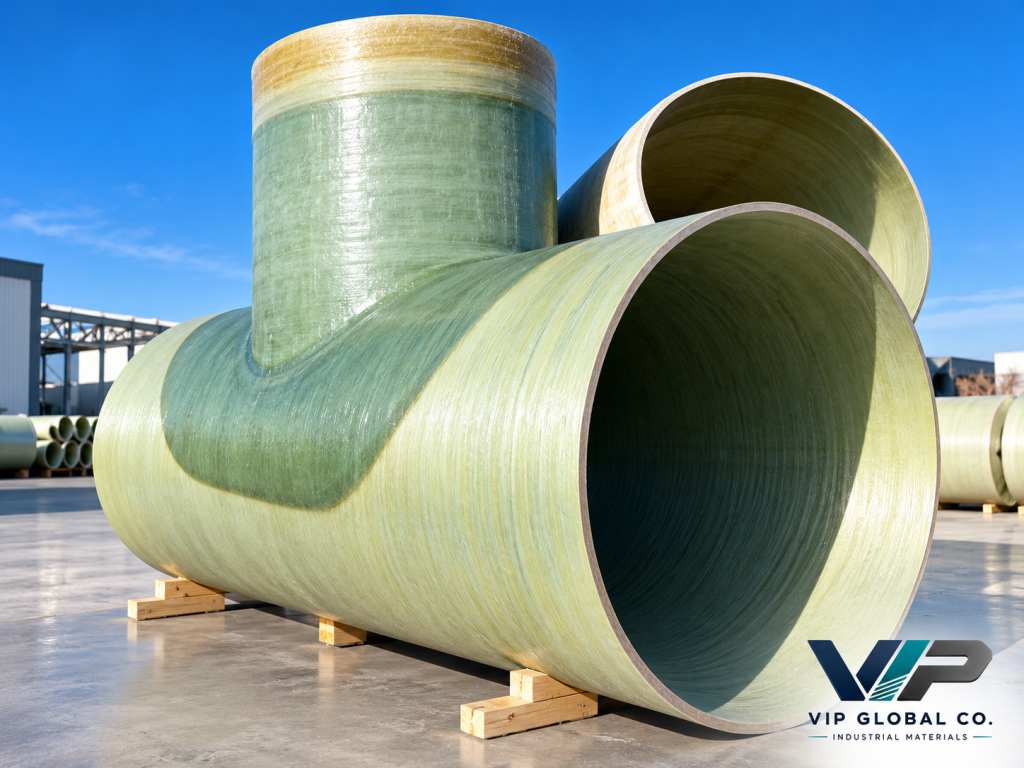
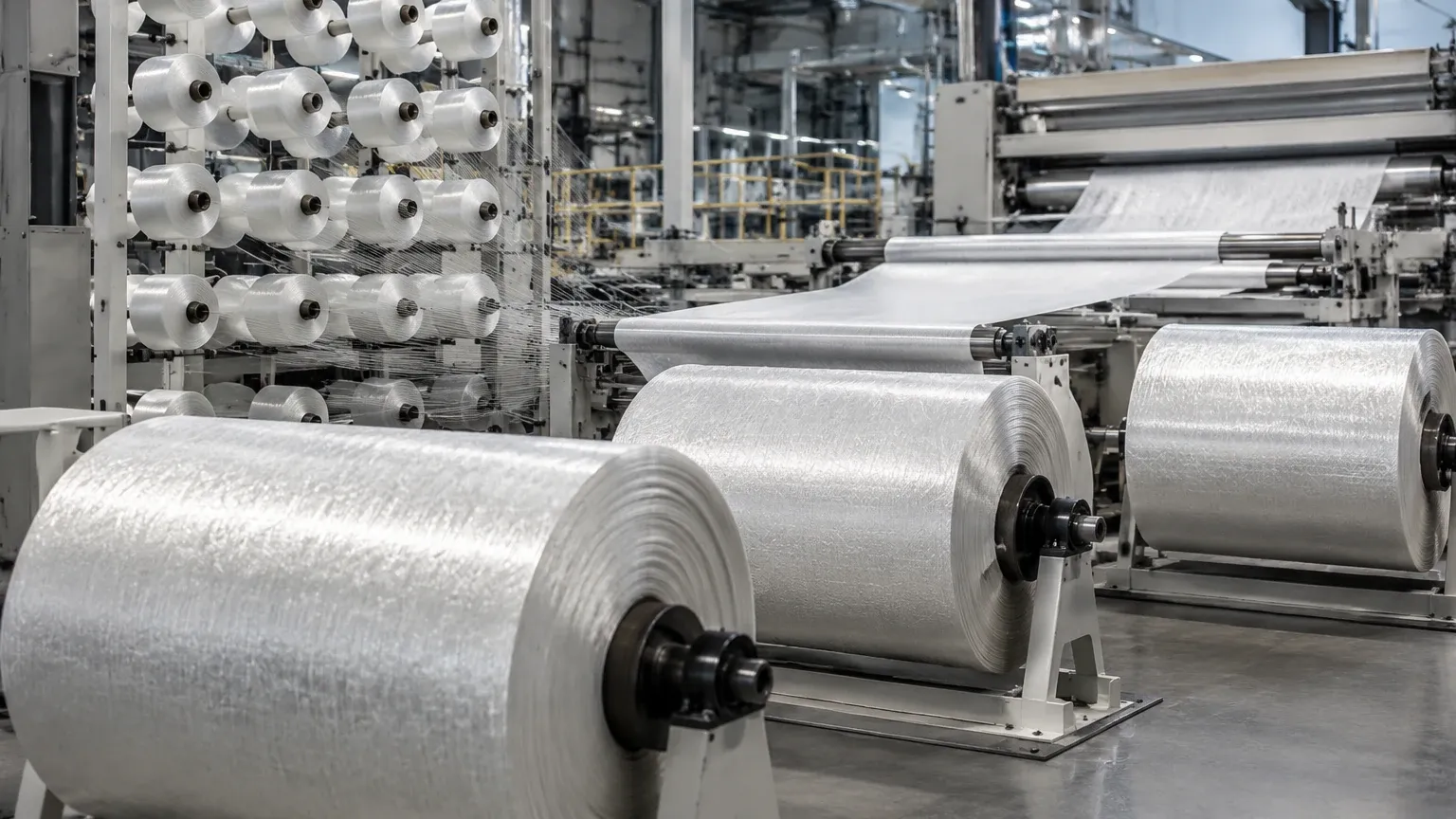
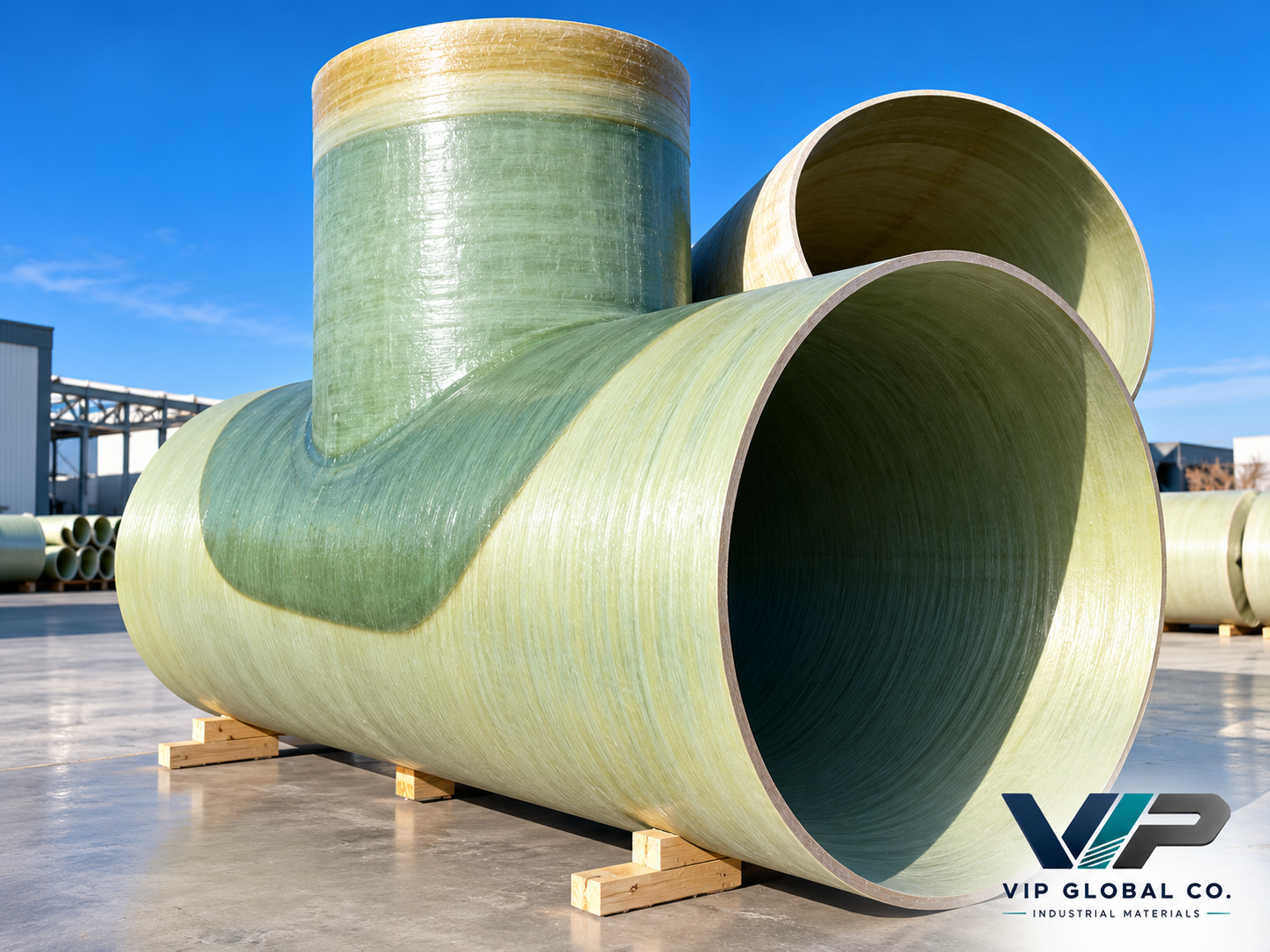
Glass-reinforced plastic (GRP), also described as fiberglass-reinforced plastic (FRP), combines glass-fibre reinforcement with a thermosetting resin. The reinforcement provides structural capacity, while the resin and fluid-contact layer help establish chemical compatibility. Polyester, vinyl ester or other qualified resin systems may be selected according to the duty.
A tank is more than its shell: the liner, joints, nozzles, seals, supports and foundation all contribute to performance. A design suitable for water storage is not automatically suitable for concentrated chemicals, high temperatures, pressure or vacuum.
Applications and Material Selection
| Application | Typical purpose | Key selection requirement |
|---|---|---|
| Raw water, irrigation and utility water | Buffer storage and distribution. | Capacity, water quality, site exposure and operating cycles. |
| Drinking water | Residential, commercial and industrial water storage. | Qualified water-contact materials and the approvals required by the project. |
| Wastewater and treatment systems | Collection, equalisation or process storage. | Actual wastewater composition, gases, solids and cleaning conditions. |
| Acids, alkalis and other industrial chemicals | Storage of compatible process liquids. | Resin and liner compatibility at the specified concentration and temperature. |
| Seawater and saline water | Storage for coastal, desalination and process facilities. | Fluid-contact compatibility and suitable external hardware. |
| Food-related liquids and selected oils or fuels | Specialised storage duties. | Specific contact-material qualification, liquid compatibility and the applicable safety requirements. |
Chemical resistance cannot be established from pH alone. Supply the full liquid composition, concentration, density and operating temperature. For drinking water, NSF/ANSI/CAN 61 evaluates health effects of water-contact materials and components; a reference to the standard does not establish that a particular tank is certified.
Tank Configurations
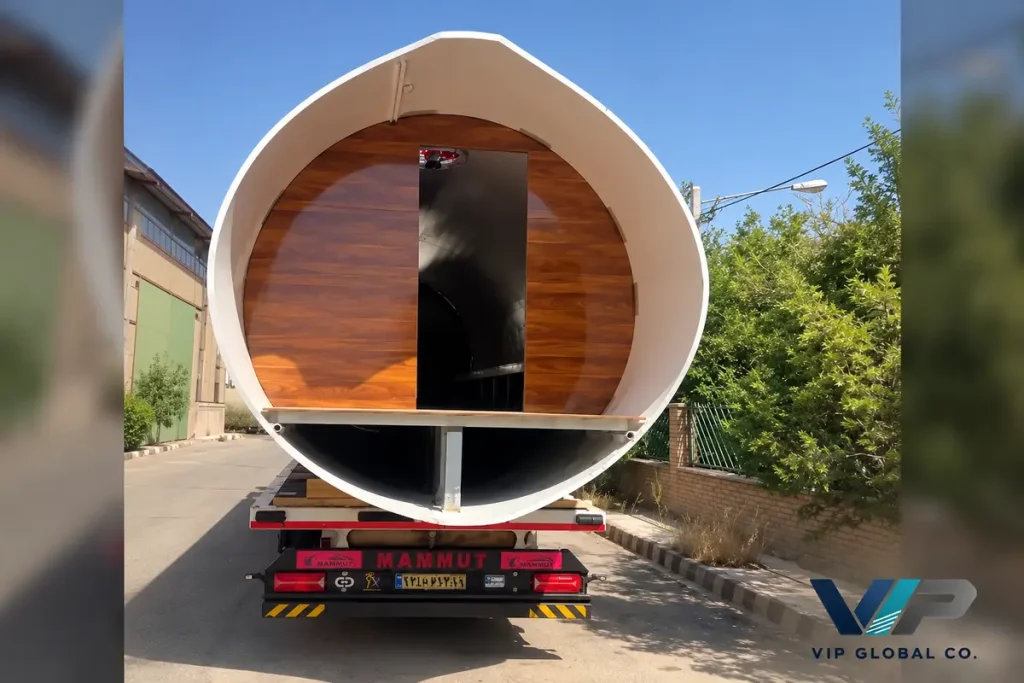
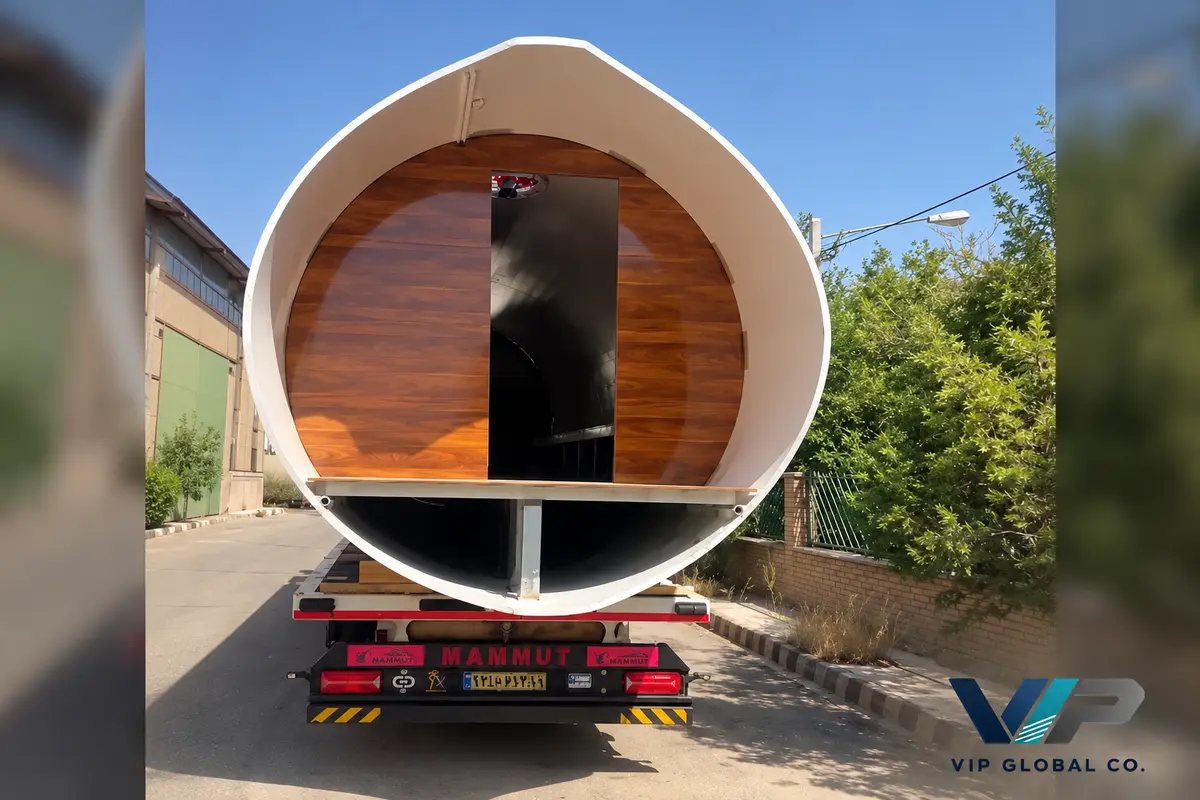
Configurations considered for a project include vertical and horizontal cylindrical tanks, above-ground installations and tanks engineered specifically for burial. Elevated tanks, vessels with mixers, filter vessels and mobile tanker bodies require their own structural and operating assessments.
Factory fabrication can suit tanks that fit the transport route. For larger installations or restricted access, site-built construction may be evaluated separately. Dimensions, capacity and fabrication location are confirmed during the project review.
Reference Capacity Options
The nominal volumes below provide a starting point for an enquiry. Final availability, geometry and usable storage volume are subject to technical review; these figures are not a stock list or a certified operating range.
| Nominal volume band | Reference capacities, m³ |
|---|---|
| Small-volume options | 1, 2, 3, 4, 5, 6, 7, 8, 9, 10, 15 |
| Intermediate options | 20, 25, 30, 35, 40, 45, 50 |
| Larger factory-fabricated options | 60, 70, 80, 90, 100, 110, 120, 130, 140, 150 |
| Custom and site-built requirements | Assessed individually against capacity, dimensions, access and installation constraints. |
1 m³ = 1,000 litres. Required working volume must allow for freeboard, operating levels and any unusable volume below the outlet.
Practical Advantages and Engineering Limits
A suitable GRP design can provide a corrosion-resistant fluid-contact surface, relatively low handling weight and flexibility in nozzle and access arrangements. A well-finished internal surface can assist cleaning. These benefits depend on manufacturing quality, the selected materials and the operating environment.
GRP does not rust like carbon steel, but its resin and laminate can still be affected by incompatible liquids, excessive temperature or mechanical damage. An opaque construction can limit light entry; tank material alone does not prevent microbial growth. Water quality, cleaning and operating practices remain important.
For exposed installations, specify a suitable exterior surface or UV protection. Do not assume that fiberglass alone provides fire resistance, unlimited weathering protection or freeze protection. Thermal insulation, where required, is a separate design feature.
Design, Accessories and Installation
The design must account for liquid density and fill height, as well as applicable pressure, vacuum, wind, seismic and equipment loads. Atmospheric storage tanks need suitable venting during filling and emptying. Pressure or vacuum service must be explicitly specified and engineered.
Horizontal tanks require suitable saddles; vertical tanks require the support arrangement established by the design. Buried tanks need checks for soil and traffic loads, external pressure and groundwater uplift. An above-ground tank must not be buried without a verified underground design.
Manways, inlet and outlet nozzles, drains, overflows, level instruments, ladders and platforms can be defined in the project specification. Connected pipework should be supported to avoid imposing unapproved loads on the tank nozzles. Repairs require an appropriate material system and procedure, followed by suitable inspection.
Manufacturing and Quality Requirements
Tank manufacture may use filament winding, contact moulding or a qualified combination of processes. The selected method must match the laminate design and service duty. Project inspection requirements may include dimensions, laminate condition and thickness, degree of cure, connections and an approved leak or hydrostatic test.
| Reference | Application to assess |
|---|---|
| AWWA D120 | Thermosetting FRP tanks for water-supply service. |
| ASTM D3299-26 | Above-ground vertical cylindrical corrosion-resistant tanks made by filament winding or contact moulding, within the standard’s defined service scope. |
| EN 13121 series | Materials, design and other requirements for above-ground GRP tanks and vessels. |
| UL 1316 | Specialised underground FRP tanks for flammable and combustible liquids. |
The governing standard, edition, acceptance tests and any certification must be agreed for the selected tank. The references above are not a statement that every supplied tank complies with all of them. Design life and warranty terms are established in the project documentation.
Request a Tank Proposal
Send the liquid name and composition, concentration, density, required working volume, temperature range, pressure or vacuum conditions, preferred orientation and installation method. Include available space, nozzle details, required approvals, quantity and delivery destination. These details allow VIP Global Co. to coordinate a suitable manufacturing proposal and delivery arrangement.