GRP / FRP Hotel Capsules
Distinctive tubular accommodation units with the flexibility to move, adapt and support tourism developments with less reliance on permanent construction.
A place to stay can become part of the reason to travel. A room overlooking the sea, a quiet retreat among trees or a compact unit opening onto a landscape can leave an impression long after the journey ends. Fiberglass hotel capsules offer a different approach to creating those spaces: an independent accommodation unit whose shell, interior and services are developed around its location and intended use.
Here, a hotel capsule means a freestanding tubular or cylindrical accommodation unit with a glass-fibre-reinforced polymer shell. Its interior can be fitted for sleeping, relaxing and short stays. Depending on the dimensions and layout, the design can also accommodate seating, storage and a bathroom. The quality of the stay depends on how well the shell, fit-out, building services and site arrangement work together.
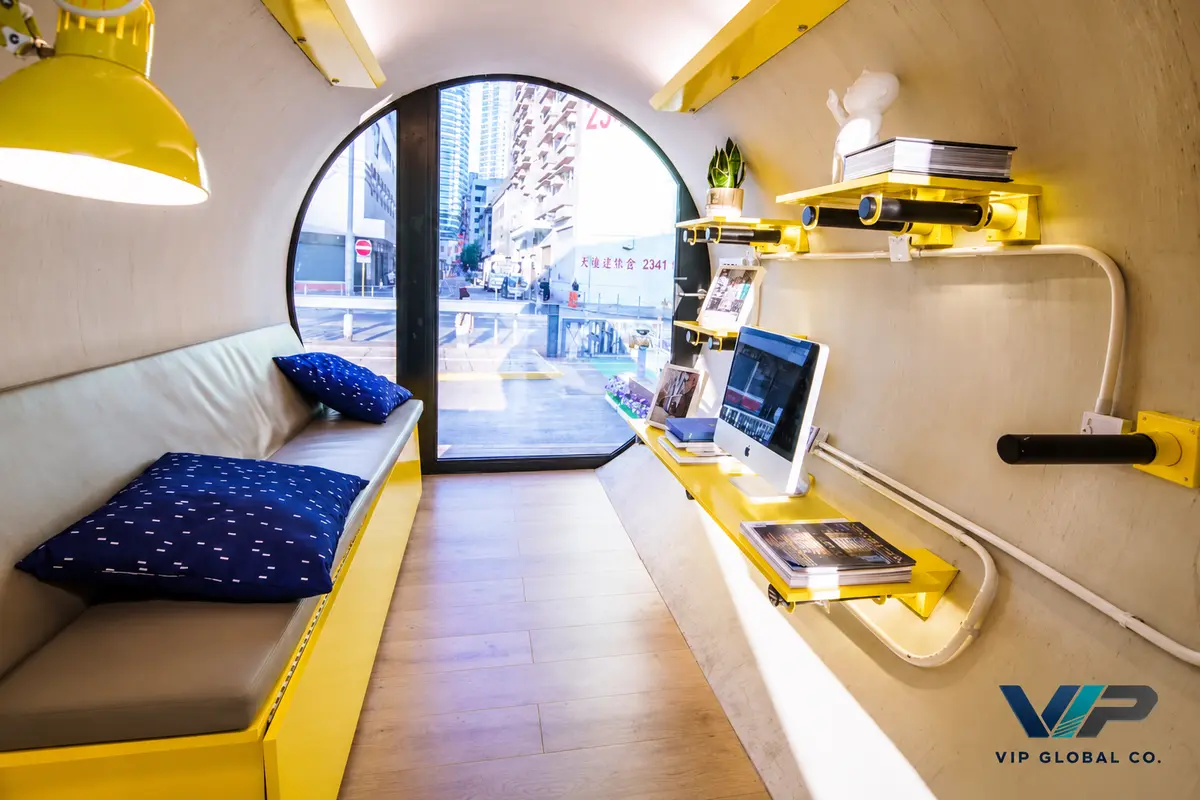
Relocatable Accommodation with Less Permanent Site Intervention
When designed with suitable lifting points, supports and detachable service connections, a capsule can be moved to another prepared site without demolishing its shell. This flexibility is useful for seasonal tourism and phased resort developments.
The unit can be reused at a new location, subject to transport access and a fresh installation assessment.
Reversible supports and carefully planned utilities may reduce permanent site works and make restoration easier after removal.
Environmental impact still depends on foundations, access roads, wastewater, transport and energy use. Relocatability alone does not guarantee a low-impact project.
What the Fiberglass Shell Contributes
The shell combines glass fibres with a polymer resin. Resin selection, fibre arrangement, wall construction and manufacturing quality influence its behaviour, so the specification must be established for accommodation use and the conditions of each project.
Composites allow curved forms and a range of surface finishes. Their relatively low weight can be useful in handling and transport, although the lifting and support arrangements still need to account for the complete fitted unit.
A fiberglass shell does not rust like steel. That can be valuable in coastal and humid locations, but the durability of the accommodation also depends on its frame, fasteners, window and door assemblies, seals and other components. Any metal parts need protection suited to their exposure.
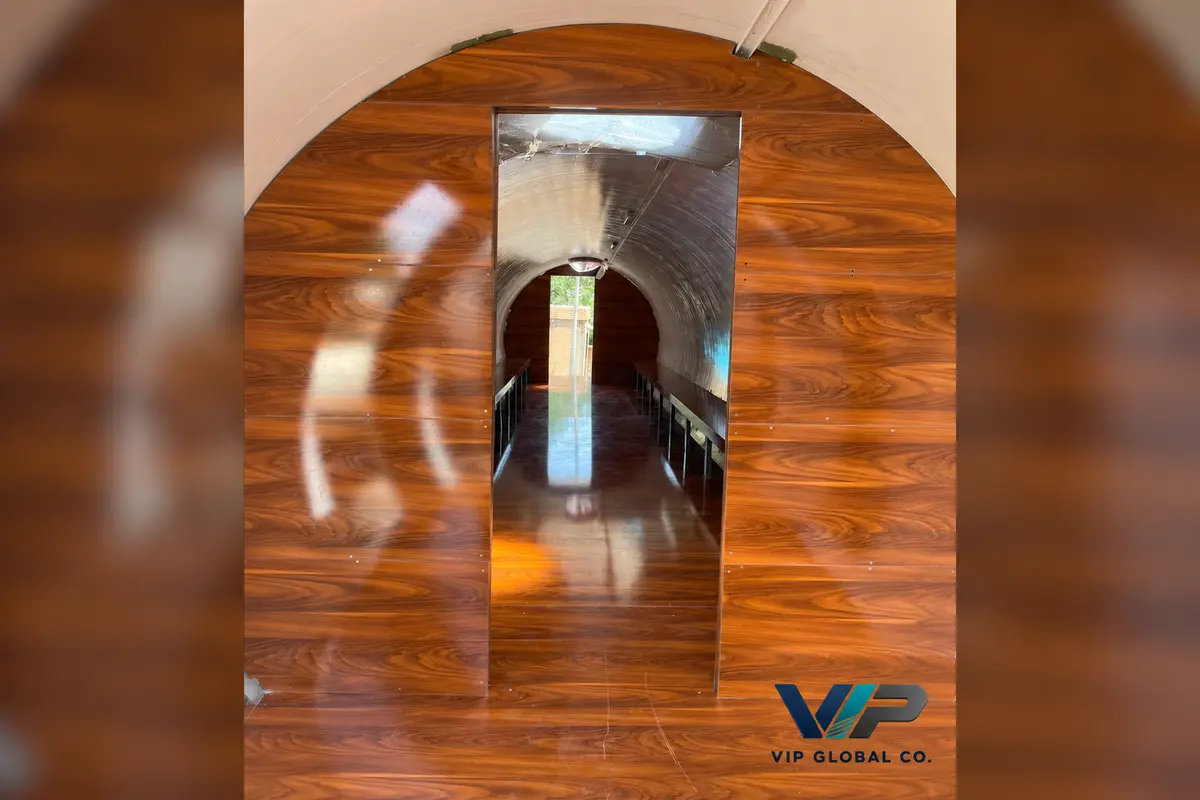
Inside the Fiberglass Capsule
The curved fiberglass shell provides an adaptable interior space. The layout, finishes and furnishings must be selected according to the intended use and project requirements.
Flooring, lining, access and building services should be coordinated with the shell and its structural supports.
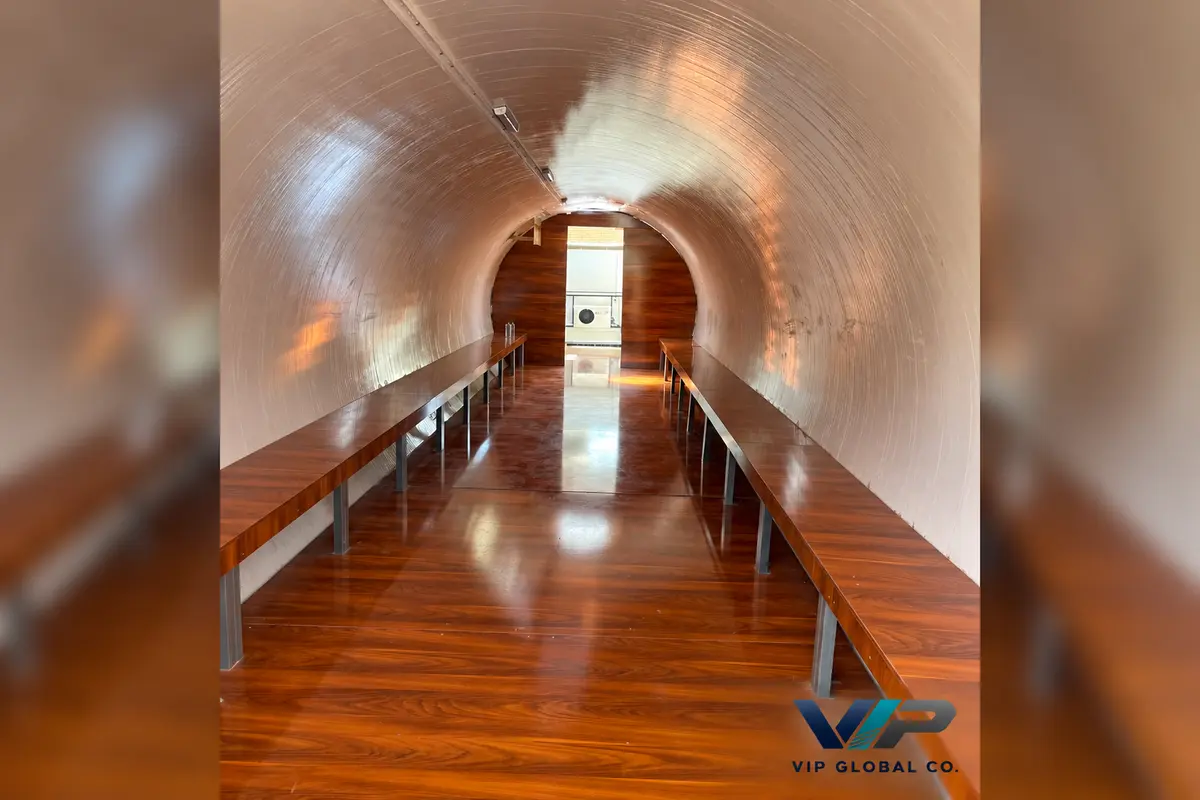
Turning a Tubular Shell into a Comfortable Room
The exterior attracts attention; the interior determines whether guests enjoy their stay. A practical capsule needs comfortable access, usable circulation space, appropriate lighting and a sensible relationship between sleeping, seating and service areas.
In a tubular unit, the level floor and interior lining deserve particular attention. Thoughtful furniture placement can use the curved envelope without making movement awkward. Shallow storage, compact tables and a clear place for luggage help a small room feel organised.
A large window can bring the landscape into the room. Its size and orientation should also account for privacy, solar exposure and shading. A glazing arrangement that works well in a mild climate may create a substantial cooling load in a hot location.
Thermal Comfort, Fresh Air and Quiet
A fiberglass shell alone is not a complete insulation system. Comfortable indoor conditions require coordinated decisions about thermal insulation, glazing, airtightness, exterior colour, shading and heating or cooling equipment.
In warm coastal climates, solar heat and indoor humidity need particular attention. Ventilation must provide fresh air as well as support temperature control. Bathrooms require moisture extraction, and equipment should remain accessible for routine maintenance.
Sound control also affects the guest experience. Spacing between units, the wall assembly, seals and the position of mechanical equipment all influence indoor noise. Acoustic performance should be assessed for the complete design rather than assumed from the shell material.
Planning a Tourism Development
Capsules can be considered for coastal resorts, tourism camps, nature-based accommodation and additions to existing hospitality facilities. Their suitability depends on the land, climate, access, permissions and level of service expected by guests.
Producing parts of the unit off site can reduce work at the installation location and bring more fabrication activities into a controlled setting. The overall programme still includes site preparation, manufacturing, transport, installation and utility connections. Prefabrication changes how the work is organised; it does not remove these stages.
The resort layout matters as much as the individual room. Paths, lighting, landscaping, privacy, housekeeping access and the relationship to reception and shared facilities help independent units operate as a coherent accommodation business.
Transport, Supports and Installation
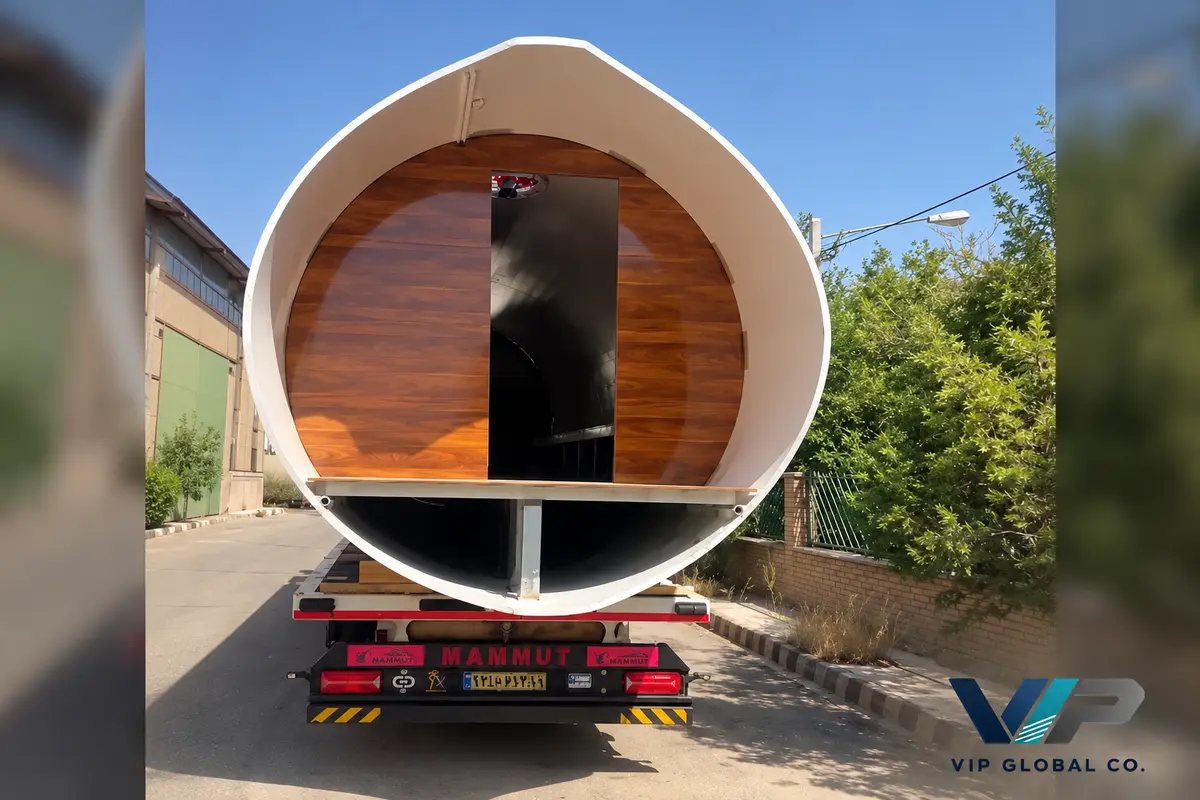
The delivery route should be checked before dimensions are finalised. Road width, height restrictions, bends, vehicle access and crane working space can all affect the design and delivery plan. Relocation capability must be incorporated into the structure and handling details from the outset.
At the destination, supports and anchorage must be designed for the unit weight, ground conditions, wind and other relevant loads. Drainage around and beneath the unit is part of the installation review. A prefabricated capsule still needs an engineered support arrangement and correct installation.
Safety for Accommodation Use
Fire performance cannot be inferred from the word fiberglass or the appearance of the shell. The resin, coatings, insulation, internal finishes and construction details influence how the assembly behaves in a fire. Any fire-performance claim needs relevant documentation and test evidence.
Escape provisions, fire detection, electrical installations and operating requirements must be reviewed against the regulations that apply at the project location. Prefabrication does not remove the need for accommodation approvals and safety assessment.
Maintenance and Whole-Project Cost
An exterior protective finish can be selected around sunlight, moisture and local exposure. Periodic checks of coatings, seals, connections and drainage help identify small defects before they lead to larger repairs. The maintenance plan should cover the fitted unit as well as its shell.
For a useful cost comparison, consider the accommodation ready for operation: shell, interior fit-out, insulation, equipment, transport, site works and installation. Energy use, cleaning, repairs and replacement-part availability matter during operation. No building form guarantees profitability; location, service quality and understanding the target guest remain central.
Project-Based Supply Through VIP Global Co.
VIP Global Co. can review project requirements and coordinate the supply of composite accommodation units through manufacturing partners. Dimensions, layout, finishes, windows and equipment are established around the location and the intended guest experience.
To begin a review, share the project location, number of units, occupancy requirements, operating seasons, preferred internal facilities, transport access and budget expectations. The aim is an accommodation unit that is appealing to guests, practical to maintain and suited to its setting.