High-Purity Silica Sand for Clear Glass Manufacturing: Selection Guide
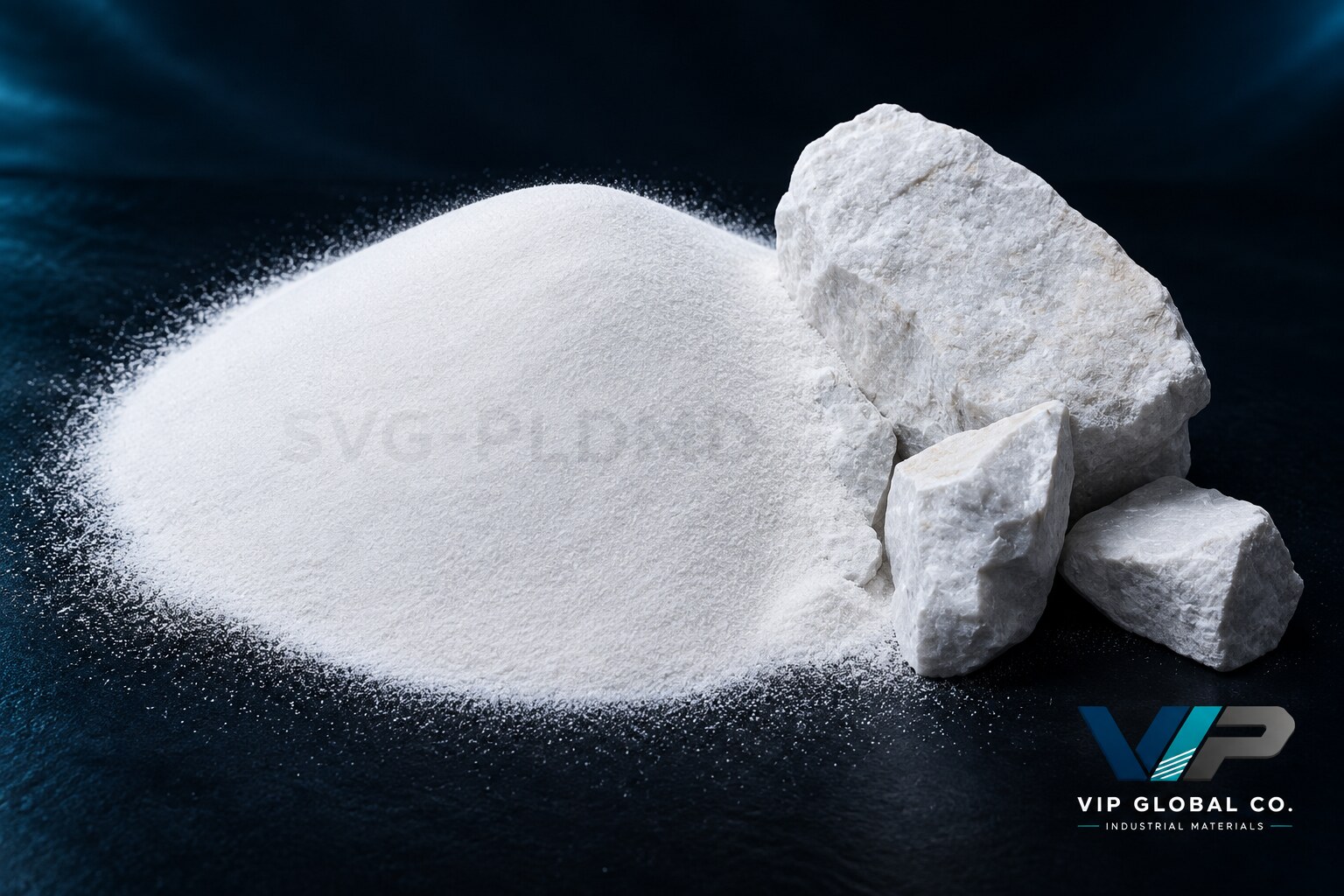
High-purity silica sand is one of the most important raw materials in glass manufacturing. While silica provides the primary glass-forming oxide, the final appearance and processing consistency of the glass are strongly influenced by chemical purity, iron content, particle-size distribution and batch control.
Why Silica Purity Matters in Glass Manufacturing
Silicon dioxide (SiO₂) forms the structural backbone of most commercial glass compositions. A high and consistent SiO₂ content helps glass manufacturers maintain predictable melting behaviour and stable batch formulation. Variations in the raw material can affect furnace operation, optical quality and final product consistency.
For clear and colour-sensitive glass, chemical consistency is particularly important. The suitability of any silica grade should therefore be evaluated using both its chemical analysis and its particle-size distribution, followed by production trials under the manufacturer’s own formulation and furnace conditions.
The Effect of Iron Oxide on Glass Clarity
Iron oxide (Fe₂O₃) is a critical impurity in silica used for transparent glass. Even relatively small variations may influence colour, light transmission and the visual neutrality of the finished product. For this reason, low-iron silica is commonly preferred for applications such as colourless glass, crystal-clear products, borosilicate glass and high-transparency solar glass.
Magnetic separation is an important processing step for reducing iron-bearing particles. SVG‑PLDMD is processed using high-strength neodymium magnetic separation to minimise metallic and iron-bearing impurities and improve batch consistency.
Why Controlled Particle Size Is Important
Particle size affects how uniformly silica blends with other batch ingredients and how consistently it behaves during melting. Excessively coarse particles may require longer melting time, while an uncontrolled fine fraction can create handling and dust-management challenges.
According to the current technical data sheet for SVG‑PLDMD, approximately 97% of the material is retained within the 0.12–0.40 mm range, with the largest fraction concentrated around 0.18 mm. This controlled distribution supports more consistent dosing, mixing and melting behaviour.
SVG‑PLDMD: Key Technical Characteristics
- SiO₂ content: 99.63%
- Fe₂O₃ content: 0.028%
- Controlled fine particle-size distribution
- Neodymium magnetic separation for reducing iron-bearing particles
- Consistent raw material quality for demanding glass applications
Typical Applications
Based on its chemical purity and controlled grading, SVG‑PLDMD is intended for evaluation in applications where clarity and consistency are important, including:
- Opal and borosilicate glassware
- Automotive glass
- Colourless and crystal-clear glass
- High-transparency solar glass
- Selected container-glass formulations requiring controlled iron content
How to Select Silica Sand for a Glass Batch
Purchasing decisions should not be based on SiO₂ percentage alone. Glass manufacturers should review iron oxide, alumina and other minor oxides, particle-size distribution, moisture, batch-to-batch consistency, packaging and supply reliability. A representative sample should be tested before full-scale adoption.
VIP Global Co. can provide the current technical data sheet, commercial information and samples for customer evaluation. Final suitability must be confirmed through the customer’s own production trials, formulation, furnace conditions and quality requirements.
Frequently Asked Questions
Is higher SiO₂ always better for glass?
High SiO₂ is important, but it must be considered together with iron content, other oxides, particle sizing and the requirements of the specific glass formulation.
Why is low Fe₂O₃ important?
Iron oxide can influence glass colour and optical transmission. Lower and more consistent iron content is therefore preferred for clear and colour-sensitive products.
Can SVG‑PLDMD be used without production testing?
No raw material should be approved solely from a data sheet. Laboratory evaluation and production trials are recommended before commercial use.